
Outside it is slowly getting colder, the air starts to nip at your cheeks and the first mist hangs over the surface of the reservoir. This is the moment when the first log crackles in the stove of the hot tub. Soaking in hot water under the open sky is not just about warmth: it is a return to the elements, with demonstrable effects on immunity, the heart, the joints and the mind. In this guide you will learn how a hot tub works, what health benefits it brings, how to use it properly and why a hot tub at Apartmány Pastviny deserves to be part of every wellness stay in the Eagle Mountains (Orlické hory).
Contents
What a hot tub is and how it works
Wooden hot tub (also called a heated barrel tub, soaking tubor simply a hot tub) is a traditional Scandinavian outdoor bath in the form of an open wooden vessel in which the water is heated to roughly 38 °C. It is most often made of larch, spruce or thermo-treated pine, which resists water and does not crack in winter conditions.
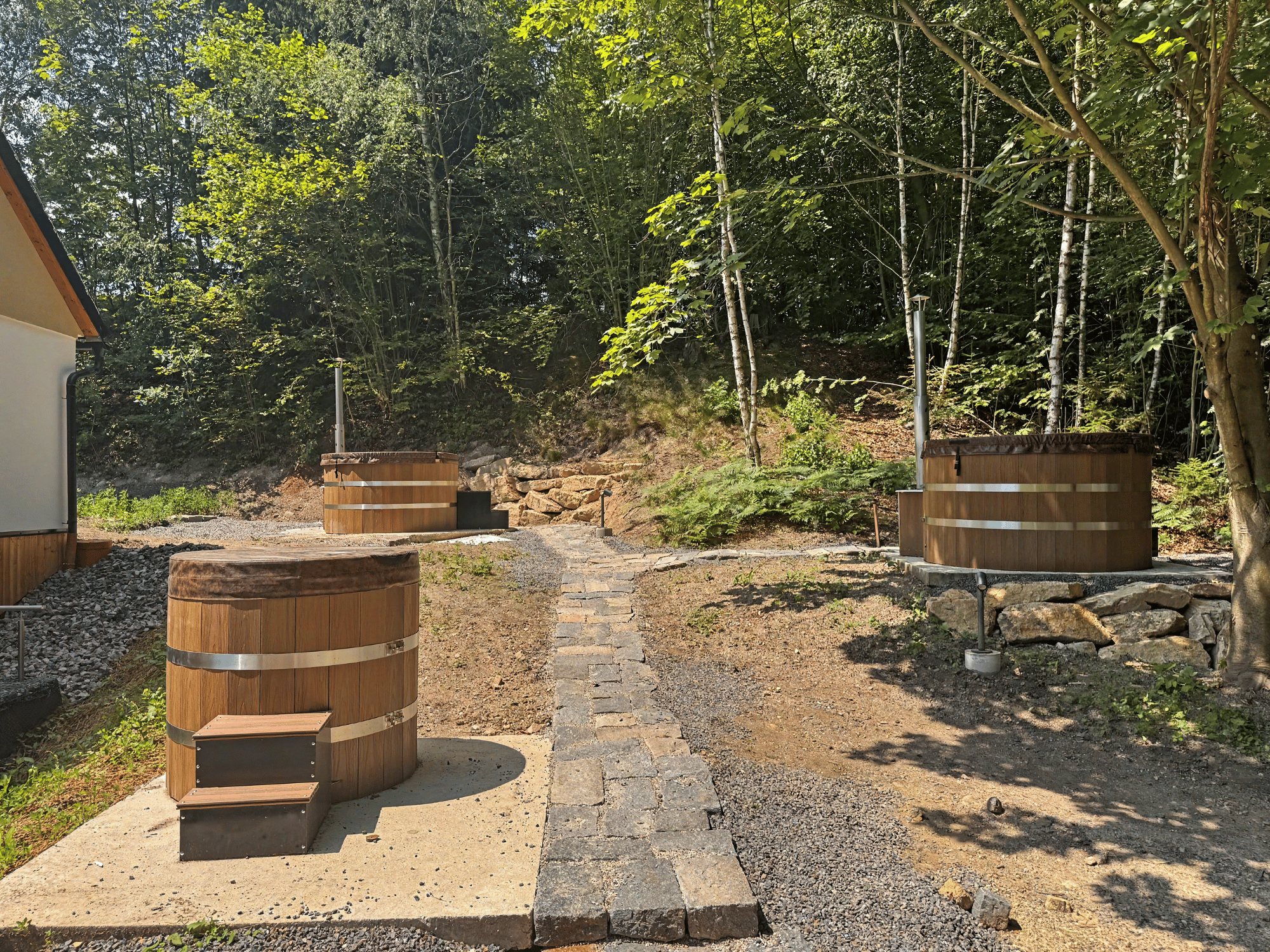
There are two main types of heating:
Wood-fired tub
The classic type: an integrated wood stove inside or beside the tub heats the water by burning logs. Heating from 10 °C to 38 °C takes 2–4 hours depending on the volume of the tub. A wood-fired tub has an authentic ritual: the crackle of the fire, the smell of smoke and a romance that electric heating will never match.
Electrically heated tub
The modern type: an electric heating element keeps the water at a constant temperature. Heating takes longer (4–8 hours from cold), but once it is warm, maintenance mode is enough. Electricity costs are around CZK 80–150 per evening bath.
Tub material
High-end tubs are made of Siberian larch (resistant to fungi, a beautiful grain), Canadian cedar (natural antibacterial properties) or thermo-treated pine (affordable, durable). Lower-quality variants made of soft spruce tend to have a shorter life.
8 health effects of soaking in a hot tub
A heated tub combines hydrotherapy, thermotherapy and aromatherapy in one ritual. The effects are comparable to spa treatments.
1. Relief from muscle and joint pain
Hot water increases blood flow to the muscles, lowers the level of lactate and releases tension. The buoyancy of the water (Archimedes' principle) takes weight off the spine and joints, which is why hot baths are a standard in rehabilitation for arthrosis, rheumatism and sports injuries.
2. Better blood circulation
Heat widens blood vessels and capillaries and improves blood flow to the extremities (hands, feet). Regular hydrotherapy helps with cold limbs, low blood pressure and venous insufficiency.
3. Deeper sleep
After a soak in a heated tub the body cools down naturally over the next 1–2 hours. This drop in body temperature is a strong sleep signal: you fall asleep faster and sleep more deeply.
4. Less stress and anxiety
The combination of warmth, the quiet of nature and the outdoors releases endorphins and lowers the level of cortisol. Studies show that 30 minutes in a hot bath 3 times a week is comparable to moderate aerobic exercise in reducing anxiety.
5. Cold acclimatisation and a stronger immune system
If you combine the hot tub with a short cool-down (snow, an ice-cold shower, a dip in the reservoir), you get the same contrast effect as in a Finnish sauna: training for the blood vessels and a stronger immune system.
6. Detox and skin care
Hot water opens the pores, flushes out toxins through sweat and improves blood flow to the skin. After a soak in a hot tub the skin is smoother, better supplied with blood and fresh.
7. Peace of mind and a digital detox
There are no notifications in a hot tub. The phone stays indoors, and all around you there is only water, fire, stars or the snowy Eagle Mountains. This digital fast is rare these days and has a healing effect in itself.
8. Better relationships with partners and family
A hot tub is a social experience. Soaking with a partner or friends in a romantic setting creates deep shared memories and encourages slow, open conversations without distraction.
How to use a hot tub properly: a guide for beginners
Preparing before the soak
- Shower with soap: the water in the tub stays clean longer if you get in clean
- Do not eat for 1 hour beforehand, no alcohol
- Drink a glass of water: you sweat even in a hot tub
- Have a towel and a bath towel close by (the move into the cold would be a shock)
The soak itself (15–25 minutes)
Get in slowly, step by step: the body has to adapt to the temperature. Sit so that the water reaches chest level, with your heart slightly above the surface.
Recommended time:
- Beginner: 15 minutes
- Intermediate: 20 minutes
- Advanced: 25–30 minutes
If you feel dizzy, your heart pounds or you feel sick, get out immediately.
Cooling down (optional)
For a contrast effect, a short cool-down:
- Cold shower (2–3 minutes)
- A bucket of cold water over the shoulders
- A dip in the reservoir in summer
- Snow in winter (roll in it, for the hardy)
Second round and rest
After cooling down and 5–10 minutes of rest you can return to the tub for a second, shorter round (10–15 minutes). When you finish, rest for at least 30 minutes, ideally with a hot tea.
Contraindications: who should stay out of a hot tub
As with a Finnish sauna, there are situations in which a hot tub is not recommended:
- Acute infections and fevers
- Unstable high blood pressure or a recent heart attack
- Acute inflammation anywhere in the body
- Open wounds and skin inflammations
- The first trimester of pregnancy (later only after consulting a doctor and at max. 38 °C)
- A very heavy meal in the last 90 minutes
- Alcohol in the blood: hot water speeds up intoxication and the risk of heat stroke
If you have a chronic condition, always consult a doctor.
A hot tub at Apartmány Pastviny
At Apartmány Pastviny you will find two outdoor hot tubs in the wellness area with a view of the surrounding countryside. The tubs are heated by quality stoves and come with:
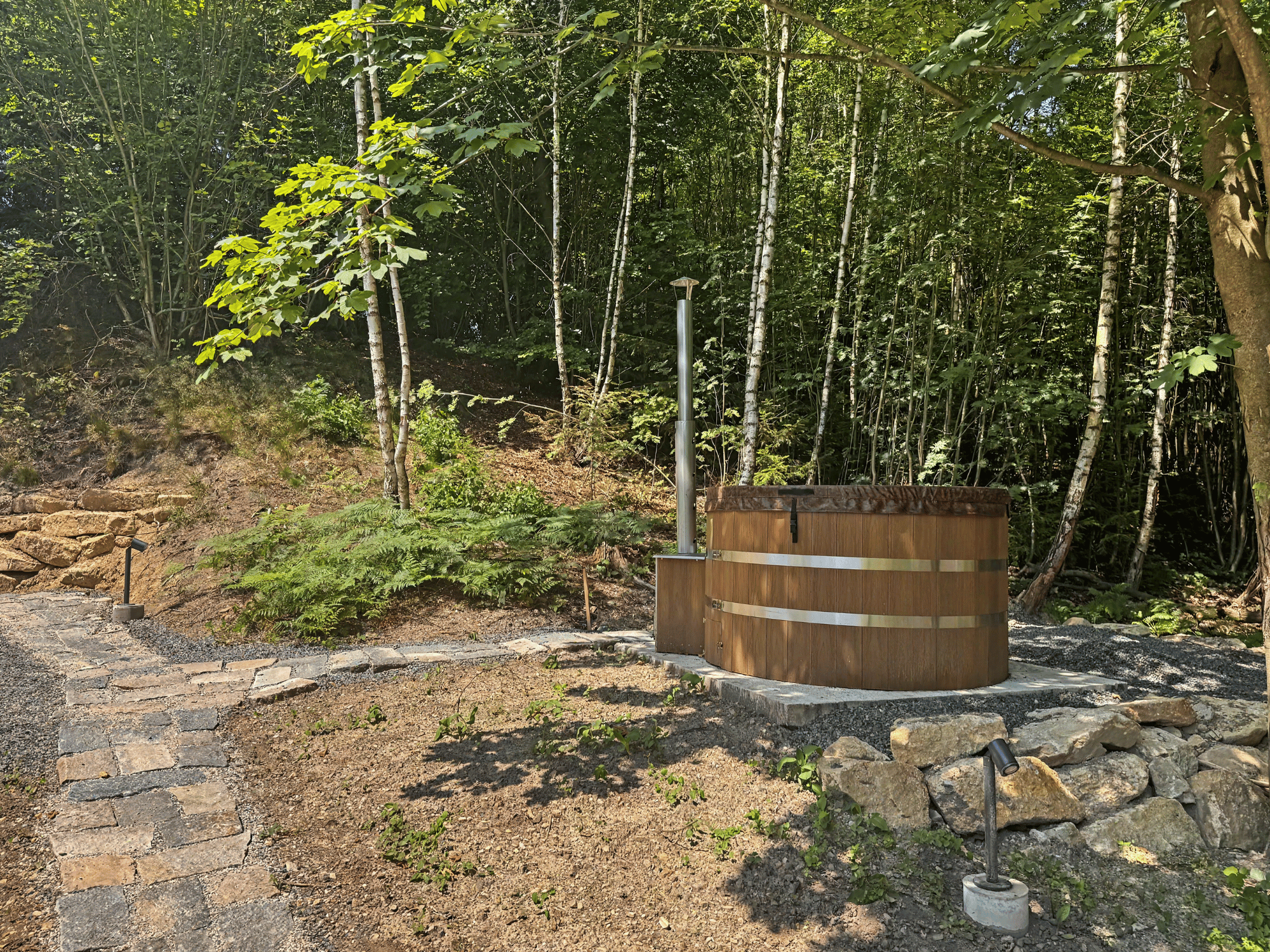
- Larch construction with a long life
- Room for up to six people in each tub
- Privacy: you book the tub just for your group
- A link to the Finnish sauna within one wellness ritual
- A beautiful location in the middle of the Eagle Mountains, within reach of Pastviny Reservoir
A hot tub is a fitting end to a day of hiking, skiing at Sportareál České Petrovice, cycling or a walk through Zemská brána (Land Gate).
The hot tub through the seasons
Summer
In the sultry heat of summer the tub is used with cooler water (32–35 °C) purely as a relaxation bath. It combines nicely with a morning swim in the reservoir.
Autumn
The golden age of the hot tub. The warmth of the water contrasts with the cool air, the mist above the reservoir and the colourful forests. The optimal temperature is around 38 °C.
Winter
The most intense experience. A hot tub in the middle of the snow, stars overhead, fire in the stove, rolling in the snow between rounds. The water is around 38 °C in winter too.
Spring
After winter weariness the tub helps wake the body and give it energy. At 38 °C it is just right in the early evening after the first spring hikes.
Hot tub vs. sauna: which to choose
| Aspect | Wooden hot tub | Finnish sauna |
|---|---|---|
| Temperature | 35–38 °C water | 80–100 °C air |
| Humidity | 100% (water) | 10–20% (dry) |
| Time spent | 15–25 minutes | 8–12 minutes |
| Social factor | High (conversation) | More of a quiet ritual |
| Effect on the joints | Very high (buoyancy) | Medium |
| Effect on the skin | Hydrating | Detoxifying (through sweat) |
| Contrast with the cold | Very good | Very good |
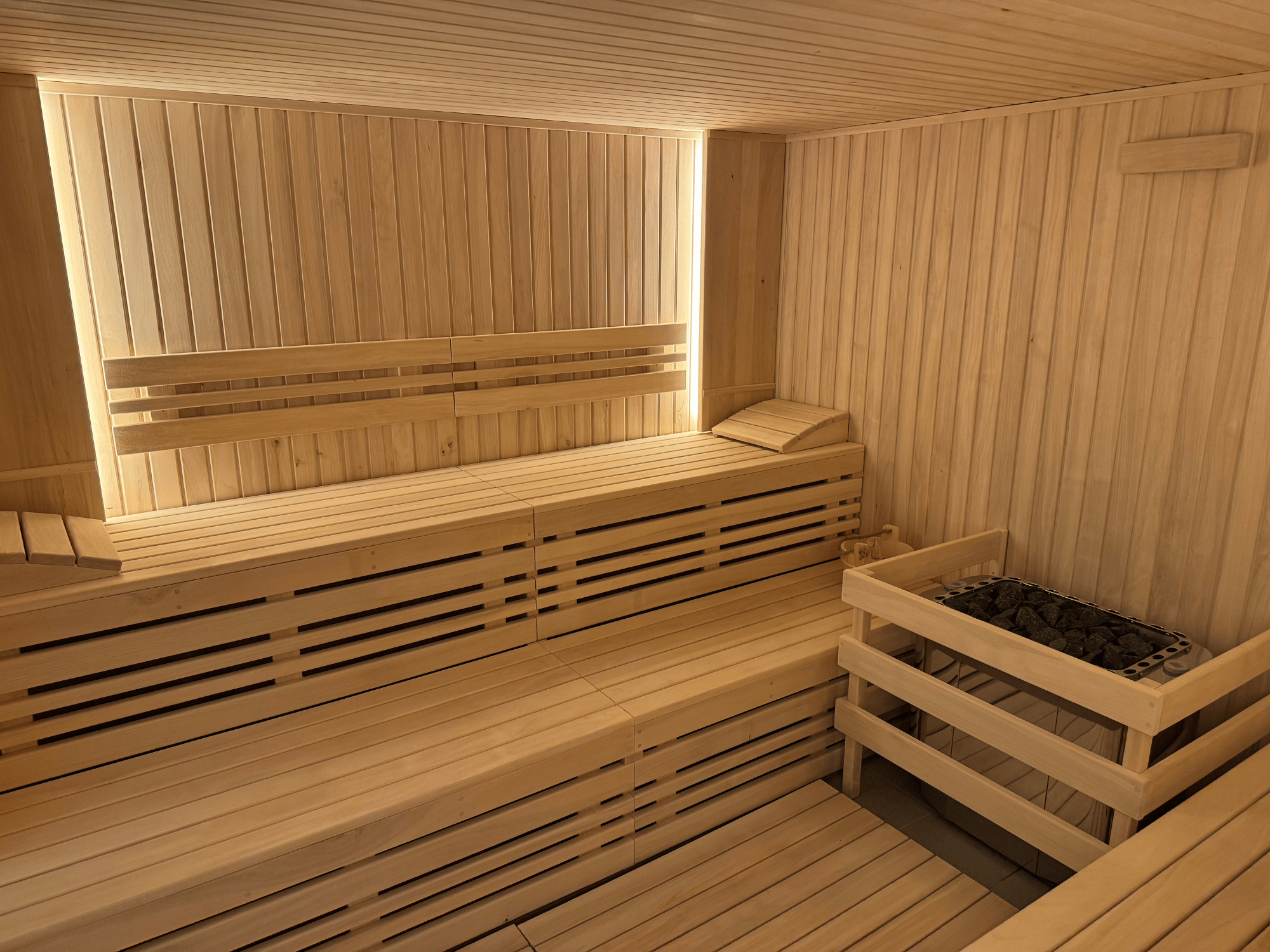
Ideally, do both. At Apartmány Pastviny you can enjoy a combined ritual in a single evening: Finnish sauna → cool-down → hot tub → rest.
Frequently asked questions about hot tubs
What is the right temperature in a hot tub?
Around 38 °C for a classic soak; we do not heat our tubs any higher. For summer use or for children 32–36 °C is enough. Above 40 °C there is a risk of overheating and a drop in blood pressure.
How long can you stay in a hot tub?
Beginners 15 minutes at most, experienced bathers 20–30 minutes. After that the body overheats and the risk of dizziness rises.
Can a hot tub be used in winter?
Yes, winter is the prime season. The water in the tub stays warm even at -15 °C thanks to insulation and active heating. The cold air above the surface only heightens the experience.
How many people fit in a hot tub?
A typical outdoor tub seats 4–6 people. Larger models take 8. At Apartmány Pastviny we have two tubs, and each takes up to six people.
Can I have alcohol in a hot tub?
Strongly discouraged. Hot water speeds up the absorption of alcohol and raises the risk of dizziness, dehydration and heat stroke. A glass of wine after the bath, yes. Alcohol during the bath, no.
What if I have a racing heart?
With cardiovascular problems always consult a doctor first. Mild hypertension is usually not a contraindication, but the water temperature should be 38 °C at most and the time in the tub 10–15 minutes at most.
How do you look after the water in a hot tub?
Professionally run tubs (as at Apartmány Pastviny) have filtration and chemical water treatment. After the season the water is changed completely. Guests do not have to worry about maintenance.
Updated: 2026. If you have a chronic condition, consult a doctor before first use.