In the morning, mist rises from the water above the reservoir, the grass on the shore is white with hoar frost and the water is a few degrees above freezing. Cold-water swimming in nature starts here, but not with a first jump into icy water. It starts at home under the shower, you enter natural water gradually, never alone and only for a short while. Below you will find how to go about it step by step, what happens to the body in the first minutes, what research actually confirms, and how to swim in cold water at the Pastviny Reservoir or, more safely, in a sauna with a cool-down shower.
Contents
How to start: from the shower to the reservoir
Cold-water swimming clubs advise starting gradually and preferably in spring, not in January. If you want to start in autumn, begin at home.
- A cold shower. At the end of a warm shower turn on the cold water, first on your feet and hands, then on your whole body. Half a minute is enough, later one to three minutes. Keep moving, do not stand still.
- Regularity. Shorter spells several times a week are better than one long effort once a month.
- The first dip in nature. While the water in autumn is not yet icy. For the first time half a minute, up to your shoulders, is enough.
- Only then the cold. You go into water of around four degrees only after months of getting used to it, and in a group.
How long in the water: a minute per degree?
You will hear the rule “a minute per degree” from every other cold-water swimmer. It is easy to remember, but the body does not work by the multiplication table. It depends on experience, build, wind, tiredness and how quickly you get dressed afterwards. A better guide is shivering: as soon as you start to shake, it is time to get out.
Cold-water swimmers give an upper limit for beginners and people over 50 that should not be exceeded:
| Water temperature | Maximum |
|---|---|
| below 15 °C | 20 minutes |
| below 10 °C | 10 minutes |
| up to 4 °C | 5 minutes |
It is a ceiling, not a target. At the start half a minute to two is enough, and a longer time in the water does not mean more benefit, only more chilling.
What happens to the body in the first minutes
Cold shock, the first three minutes. Cold water on the chest and face triggers a gasp you cannot control. Breathing speeds up, the heart beats faster and blood pressure jumps by tens of millimetres of mercury. A large share of accidents in cold water happen right now, not later. That is why you do not jump into cold water and your head stays above the surface: if you gasp under water, you breathe in water.
Weakening muscles, the following minutes. Hands and feet stiffen with the cold, your grip weakens and swimming gets harder. Even a strong swimmer may not be able to swim to the shore after ten minutes in icy water.
Afterdrop once you are out. The body goes on cooling for a long time after you get out. Cold blood from the hands and feet returns to the core and the internal temperature keeps falling, most of all roughly ten to fifteen minutes after leaving the water. A hot shower straight after the swim speeds up this drop and you may feel dizzy. Better to dry off, put on dry clothes, get moving and have a warm tea.
Safety: what always applies
- Never alone. Even experienced cold-water swimmers do not go into the water without someone on the shore.
- Into the water gradually, feet first. Knees, waist, shoulders. Breathe slowly, do not hold your breath.
- No jumping and no diving. Cold shock under the surface is the most common way to an accident.
- Know the way in and the way out. Getting out is harder than getting in, because your fingers stiffen in the cold.
- Keep time with a watch or a friend. In the cold your sense of time disappears.
- Dry clothes close at hand, in the order you will put them on. A hat, socks, a warm drink.
- No alcohol. It widens the blood vessels, the body then loses heat faster and a person judges the cold less well.
- Walk on ice only where it is thick. Firefighters advise walking on ice only when it is at least 10 to 12 centimetres thick, and measuring it near the shore. Cutting holes in the ice is not a beginner's job. Leave that to organised groups.
Who should be careful
Cold water is a big strain on the body, above all on the heart. People with heart disease, high blood pressure, a rhythm disorder, after a heart attack or with a lung disease should not go into it without a doctor's approval. A doctor from the Hypertension Centre of University Hospital Olomouc also warns of this: in people with long-term high blood pressure, cold water lowers the threshold for heart rhythm disorders.
People with epilepsy and Raynaud's syndrome should be careful too. With a fever, a cold or a cough, do not go into cold water at all. And if you are older or not sure, talk to a doctor first.
What cold-water swimming really does, and what it does not
A frequently cited study on cold exposure is a Dutch one from 2016. Researchers divided 3,018 people into groups who, for a month, ran cold water for 30, 60 or 90 seconds at the end of a warm shower. People in the cold groups then had 29% fewer days off sick than those who showered warm only. Thirty seconds worked as well as ninety.
But they were ill just as often and for just as long. The difference was only in how many days they stayed at home. The authors themselves do not think cold water markedly strengthened immunity.
Honestly summed up:
- Supported: people tolerate short cold exposure well and get used to the cold. A regular cold shower is linked with fewer days off sick.
- Not supported: that cold-water swimming strengthens immunity enough to protect you from the flu. That it “detoxifies” the body. That a longer time in the water brings more.
So why do it? For the feeling afterwards. The skin tingles, the head is clear and warm tea tastes like never before.
Cold-water swimming at the Pastviny Reservoir
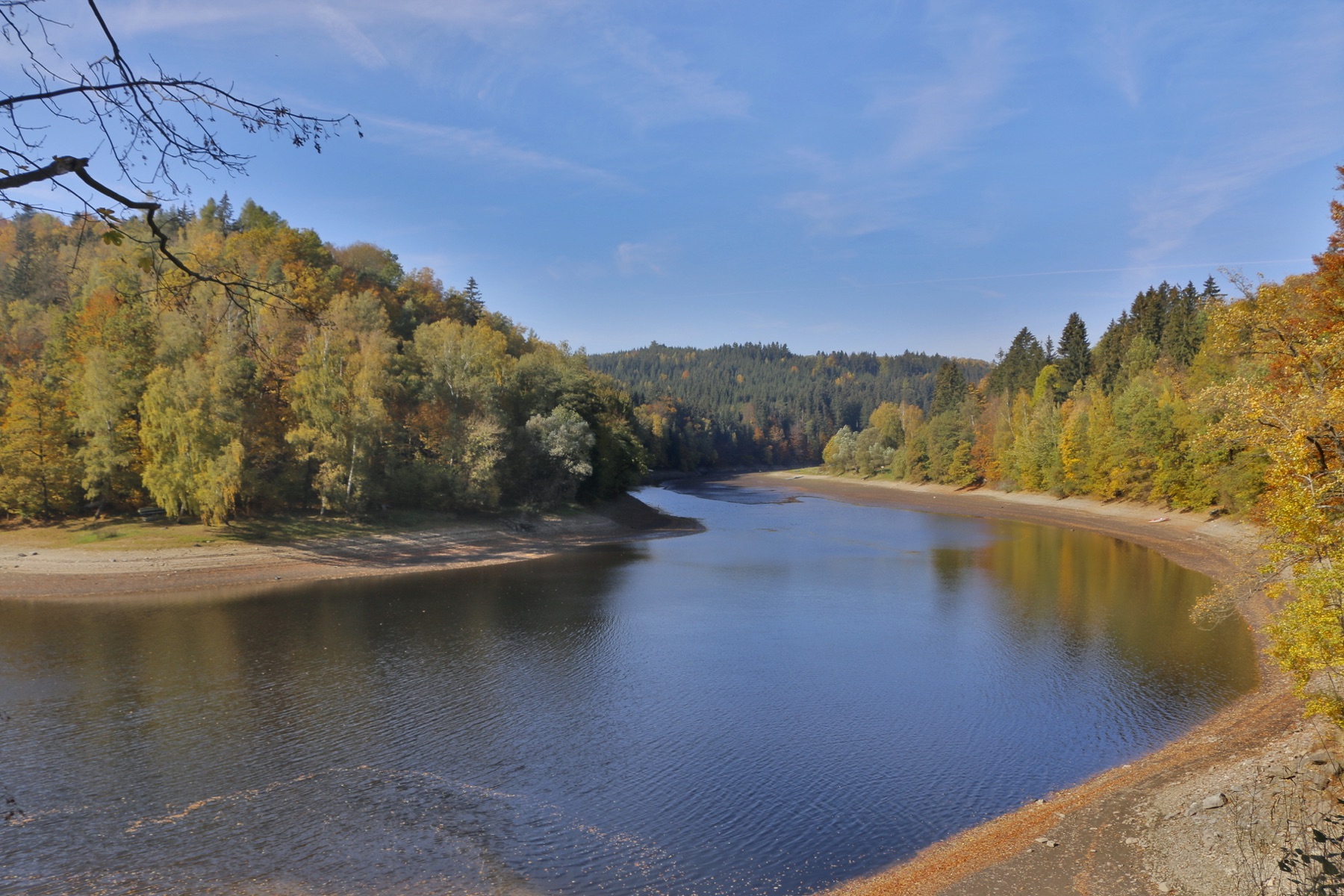
The Pastviny Reservoir is surrounded by forests and its water tends to be colder than in lowland reservoirs. You can swim here all year round, but bear in mind:
- The beaches are by the campsites Šlechtův palouk, Petrův palouk and U Kapličky. Elsewhere the bottom is stony.
- The water rescue service keeps watch only in the summer season. Outside summer, swimming is at your own risk.
- Do not enter the water by the dam and by the power station, the water flows there.
- Go onto the ice only when it is thick. Near the inflows and by the dam it tends to be thinner.
- The water temperature at the dam is published on the website prehrada-pastviny.cz.
If you want to start with people who know what they are doing: the nearest cold-water swimming club we know of is Otužilci Česká Třebová. They swim in the Javorka pond in Česká Třebová and in the Tichá Orlice in Ústí nad Orlicí.
Sauna and a cool-down shower: a gentler start
If you are afraid of cold water, you can start in the wellness area. The sauna warms the whole body, then comes the cool-down shower: cold water runs over your whole body, a few seconds and it is done. Then ten to fifteen minutes on a lounger in the relaxation room. Two or three rounds are enough. This order, heat first and then a short spell of cold, is the classic sauna rhythm and for a beginner it is far safer than a long swim in an icy reservoir.
Beware of the reverse order. After a long swim in cold water, do not go straight into a hot sauna. Wait until your teeth stop chattering, usually a quarter to half an hour, and only then warm up.
Feel the contrast that wakes you up: the heat of the sauna, cold water on your shoulders and then the silence of the relaxation room.
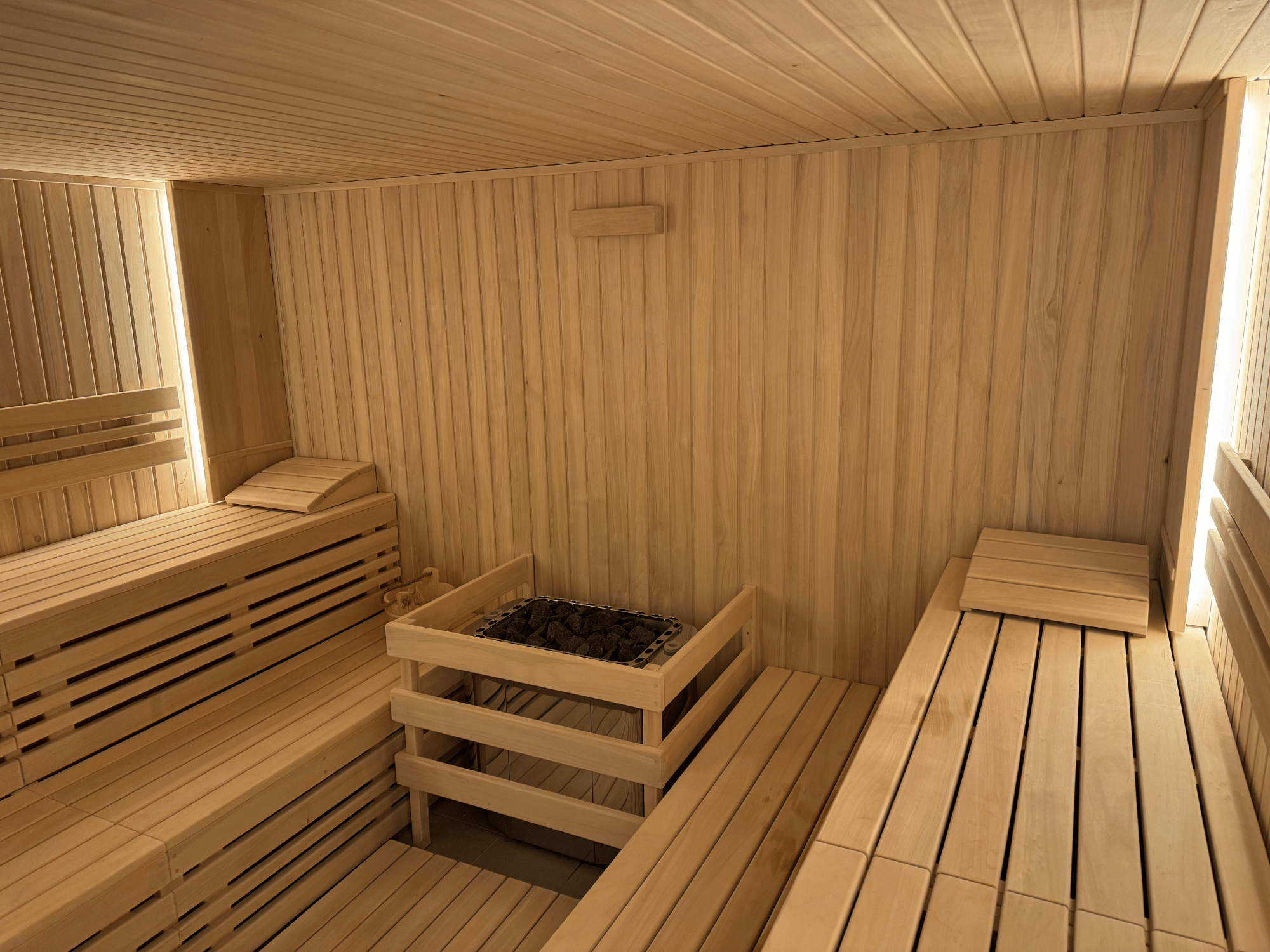
- Sauna wellness (sauna, cool-down shower, relaxation room): 2 hours CZK 360, 4 hours CZK 490 per person. Book at least 4 hours in advance.
- Towels and sheets are inside. What to bring with you is covered in the article what to bring to the sauna.
Frequently asked questions
How do I start cold-water swimming?
At home. At the end of a warm shower run cold water for half a minute and gradually extend it to one to three minutes. Go into natural water for the first time while it is not yet icy, for half a minute and with someone on the shore.
How long should I stay in cold water?
A beginner half a minute to two. Get out as soon as you start to shake. Cold-water swimmers give an upper limit for beginners of 10 minutes in water below 10 °C and 5 minutes in water up to 4 °C.
Does the rule of a minute per degree apply?
Not as a rule. It is a shortcut the body does not respect: the same water feels different in coldness to everyone. Go by shivering and by a time that someone else keeps.
Does cold-water swimming strengthen immunity?
There is no strong evidence for it. A Dutch study of 3,018 people found 29% fewer days off sick after a month of cold showers, but the same number of days of illness.
Can I swim in cold water in the Pastviny Reservoir?
Yes, all year round, but at your own risk. Enter from the beaches by the campsites, never by the dam and the power station, never alone, and go onto the ice only where it is thick.
Can I go to the sauna after a cold swim?
After a short cool-down, yes, that is the usual sauna rhythm. After a long swim in icy water, first wait until your teeth stop chattering, usually a quarter to half an hour.
This article is not medical advice. If you have health problems, talk to a doctor before taking up cold-water swimming.
Photos: Ximonic (Simo Räsänen) (CC BY-SA 3.0), Pavel Hrdlička (CC BY-SA 4.0), Wikimedia Commons; the rest from the archive of Wellness Apartmány Pastviny.